Sunday, 12 November 2023

The Essay

 As I reflect on the enlightening session last week with Peter Thomas in which Peter was exploring what defines an essay, I am inspired to share one of author and professor Alan Wall's pieces of writing for the fortnightly review of books about the written essay.  I am fascinated by Wall's thought of the essay as  'provisional' and something that 'thinks without certainty'. These explorations speak to me in ways which go beyond the fact that this is my dad's work and I wanted to share the full essay here as well as some extracts below in case it is of interest to my fellow researchers.

 Alan Wall on CUP's Companion to the Essay (fortnightlyreview.co.uk)

'It’s more of an attempt than a final definition. It is by its very nature provisional.'


'Essays do not round themselves off with a definitive QED. They slide away, with a host of other questions arising.'


'The essayistic mind-set has an open aperture at both ends. It does not close itself off with conclusions. It remains provisional, in order to dance on the page. When one begins thinking essayistically, one soon wanders far beyond the scope of the essay.'


'The essay thinks without certainty. It shapes its literary form into a question-mark. It says human thought is a query, not a resolution.'

(Alan Wall, 2022, Fortnightly Review)

Monday, 2 October 2023

Process of Autoethnographic Research

 I am half way through my data collection process. 

This is what I notice about autoethnographic research:

The line between data collection and analysis is much harder to maintain. It is very tempting to begin noticing themes already.

I am in a sense trying not to think too hard in my journals but just allow what is in me to dance onto the page.

I am naturally being influenced by the other theories I am reading, and so the line between my own thinking and that of the scholars I read also becomes more blurred.

But the deeper into the inquiry I go, the more I am seeing the interconnectedness of everything and this makes the 'woven feel' of all the stages of the inquiry feel organic and meaningful.

I remind myself that just as a choreography evolves from techniques and outside influences as well as the inner vision of a choreographer, so does an inquiry. So long as this is acknowledged and appreciated and celebrated, there is nothing to be afraid of. 


Friday, 15 September 2023

Moving towards module 3

 As I embark on the last stage of completion of my last AOL I have been considering the challenges of these Essays. It seems as though I continuously flit in and out between what happened and the learning that grew from it. How challenging this balance is. Unsure whether it is because my topics deal with the emotional realm and therefore keep drawing me back to memories and making me relive them, getting side tracked from the more academic way of writing.  I am having to frequently step away from the work and return for this final AOL. How hard it is to look back and truly learn the lessons from something.  Although not graded, I cannot bear to submit anything that is not at fully developed place.

I commence my enquiry simultaneously and the timing seems right as I rest from a stress reaction in my metatarsal was not anticipated. I was working so much, I seemed literally to lose my footing as I landed from a jump and this injury has forced me to stop and take time for my body to properly recover. I am approaching the months ahead of my enquiry as a hopeful journey of exploration. 

Delving in to the place of deep ecology and earth understanding through my inquiry:

 'How might a deeper awareness of, and connection with natural environments influence my health, well being and artistic development?'

Grateful to have caught up sufficiently to be staying with the same fabulous cohort.


Monday, 12 June 2023

Theoretical framework

Having now finalised my question 'Can a deeper awareness of and connection to the natural environment impact my health and artistic development as a dancer?'
 I am sharing my theoretical framework. Although I have many other sources I will draw on, here are my main 3 sources:


1: Author and professor in the areas of both dance and environmental studies Andrea Olsen provides evidence for the connection between our minds, bodies and the earth and encourages us to explore this interconnectedness through embodiment and greater awareness of the patterns which can be identified through our bodies, lives and the planet around us in Body and Earth (2020). She justifies her theories with strong foundations combining biology, environmental science, meditation and expression through creative exploration.

Although she explores how as human beings, we are part of a large-scale dance as we move an ‘choreograph our days’ she does not specifically refer to the genre of ballet in this work or deal with how dancers of this particularly regimented style would respond to the exercises she has set out. She does however say that ‘All the physical laws of the planet are inherent in our bodies. Movements disconnected from underlying physical integrity are those that create injury or loss of vitality.’ (2020, p.74) With the high injury rate of professional ballet dancers this did make me consider how much physical integrity ballet dancers truly possess.


2: In 2021 Jimenez and multiple authors reviewed the existing studies to assess the impact of nature exposure on health and they discovered that longitudinal observational studies were beginning to look into the effects of nature exposure on depression, anxiety, cognitive function and chronic disease and there are enough studies to suggest that more exposure to green space is linked with better mental health outcomes. (2021, p. 5) Although the studies specifically addressing anxiety and depression are limited and of low quality there was some evidence to suggest that there were improvements in some with a depressive mood after short term nature exposure. There is also strong evidence showing improved cognitive function ‘even after a short time in natural environments as well as improved immune function through an increase in natural killer cells through ‘a potential pathway for improved immune function’ via ‘exposure to phytoncides (a substance emitted by plants and trees to protect themselves from harmful insects and germs). (2021, pp.4-5) However, once again is this research relevant to dancers who live very unique lifestyles?

3: Dwarika and Haraldsen (2023) reviewed the current research on dancer’s mental health and found that this is still an under researched area although ballet dancers have been researched more than any other genre the evidence is ‘still quite anecdotal in nature-revealing topics uncovered, populations left out and, and too little rigor in the methodological approaches.’ (2023, p. 12)

However, there is clear evidence that dancers who find it harder to manage stressors usually possess more debilitative personal qualities such as perfectionism, obsessiveness and ego orientation (2023, p. 8) and that most of the studies examined describe the dance world as an unrelenting environment with pressure to conform to ideals with teachers and directors in such environments adopting authoritarian teaching styles and showing little interest in supporting dancers’ mental health.

The study also highlights how developing psychological skills through training can provide protection and better resilience to cope with some of the pressures of the dance environment. However, it does bring up the question of whether any training can truly protect against ‘abusive’ environments. The study does not seem to be able to fully address this issue. But it does acknowledge that there is a ‘mutual relationship between the individual and its environment. An individual is influenced by the environment…Thus it is not only the absence of psychological flexibility, relatedness or the complex ability to cope with diverse stressors, but also diverse and complex interactions between an individual and its environment that can result in mental health issues. (2023, p.2)

Ballet has particularly high levels of cultural stressors and is described as an ‘authoritarian, hierarchical, cult-like power achievement culture where dancers accept abuse and unreasonable behaviour in a state of silent conformity’ (2023, p. 7) These stressors can lead to poor mental health outcomes and the development of mental health illness, with eating disorders and anxiety among the most common illnesses found. Although some positive mental health outcomes are identified such as life quality, confidence and self efficacy, these are only found in studies also reporting the absence of mental health. (2023, p.9) Although mental health is described as a dynamic state, overall the review found ‘strong indications for both the absence of mental health and the presence of mental illness’ which ‘point to a most warranted change in the dance world to address these issues.’ (2023, p.11)

Bibliography

Dwarika, M S., Haraldsen, H M. (2023) ‘Mental health in dance: a scoping review,’ Frontiers in psychology, 14, article number 1090645. Available at: DOI=10.3389/fpsyg.2023.1090645   

Jimenez MP, DeVille NV, Elliott EG, Schiff JE, Wilt GE, Hart JE, James P. (2021) ‘Associations between Nature Exposure and Health: A Review of the Evidence.’ Int J Environ Res Public Health. 18 (9) article number: 4790.pp 3-19. Available at: doi: https://doi.org/10.3390/ijerph18094790.

Olsen A. (2020) Body and Earth. Middletown, Connecticut: Wesleyan University Press


Window of opportunity

 As I look at my life ahead. 

I remind myself that it is only in this present moment that I can truly exist

The future is unknown to all of us

If I look only for external circumstances to make me feel enough I will waste this life

No experience is going to bring long lasting fulfilment

It is the appreciation of each moment life offers me that that will enrich my existence and bring me true satisfaction

Take this image below, I could look out of that window and wish I was outside by the stream, or I could appreciate the window that I am seeing that beautiful stream through. 

It is easy to lose sight of what is in the foreground of an image such as this and to realise that is part of what makes this image meaningful.

I make a commitment to consciously notice all that is in the foreground and background of my life and not to take it for granted.  

I feel that for the first time in my life I am ready to sit with the stillness and to enter the next stage on the journey to coming home to myself.


Wednesday, 7 June 2023

Exploring Ekhart Tolle

 Over the last few weeks I have become increasingly engrossed in the teachings of Ekhart Tolle. His theory of the power of now is something I was familiar with for some years but I have found myself being drawn more deeply to these concepts and being at a place in my life where I am ready to fully embrace this way living. 

The idea that we are separate from our thoughts, that the true essence of ourselves is the space between thinking and doing. I find real comfort in this feeling of the one aspect of ourselves that is constant regardless of external circumstances and external bodily appearance or sensation even. It is that unexplainable consciousness which simply 'is'. This is who 'I' really am. So often when someone says who are you I reply with

I am Ann

I am a ballet dancer

Yet this speaks nothing of who I truly am.

To try and explain who I am would in itself defeat the entire concept because I am my presence not my titles, names or appearance or ideas about what I am.

In a way the essence of each human transcends words. Yet we often know from the presence of someone more of who they truly are. For example we might meet a person who tells us that they are for example selfish and arrogant yet we might sense in them the complete opposite energy. They have been conditioned to believe that is who they are but deep down that is not the essence of that person. Similarly we can meet people who have an exterior of kindness but it is all for their own benefit and we can sense that underneath it there is a untruthful quality. But in a sense this is all thoughts too and defeats the point in itself. I am currently navigating understanding my intuitive side more deeply and understanding the difference between thinking and intuition.

I find this fascinating and I am enjoying losing myself in some of these concepts.

This video was especially enlightening for me:

https://www.youtube.com/watch?v=eGH6sdODcOw


Tuesday, 7 March 2023

Ethical considerations

Ethical considerations Some ethical considerations as they emerge for my research proposal for: An exploration of whether a deeper awareness of and connection to the natural environment impacts the mental health and artistic development of ballet dancers 


 Mental health is an area I will be exploring in my inquiry. I will not discuss this in the interviews with the dancers I plan to carry out in case it is triggering for them. But will send them a short questionnaire following the interview which they can fill in if they wish and send back to me which will address areas relating to mental health and connection to nature.

 I will be addressing mental health with the counsellor who I intend to interview who specialises in dancers. This participant was also a professional dancer so I will ask them questions regarding their relationship to nature throughout his career as well as see if any strategies they now use with clients are nature based. Because I know this participant, I will need to retain objectivity and a certain degree of formality when talking to the individual to ensure we stay on track of the topic.

 I will be interviewing one retired ballet dancer who is now a teacher and character dancer who I know has had a strong connection to nature. Because I know this participant I must be careful to ensure I work in a way that keeps the interview fairly formal I must be mindful that they may share more personal information than what they intend to because they know me. So I will use a semi structured approach and must be very objective in how I interpret the data. 

 I intend to do a call out for 2 Ballet dancers trained in the UK at vocational ballet schools and currently dancing professionally either freelance or in a company. These participants must have performed at least once in both an outdoor and indoor context. I intend to do this across social media groups and perhaps by emailing individuals who can then forward on the information to others. 

 I will be using my own journals and experience as a professional ballet dancer throughout this study. I need to be mindful that revisiting journals does not bring back past trauma and I need to consider how discussing trauma within the study may be triggering for others reading it. 

 If I am asking participants questions related to their training and careers I will retain anonymity of all institutions and companies and any names they may refer to. I will omit any information which makes them identifiable. Apart from the counsellor who in principle has said they are happy for their name to be used.

 I am concerned to ensure I reach a culturally diverse participant base although this is difficult when I am only using a few participants. So not sure whether focusing on UK participants for this research is better in that it is more specific? Or shall I just open up the inquiry and see who comes forward? 

I want to ensure I am being inclusive in this research and considering disabled dancers as well, even though they do not form a large part of the current intake in vocational ballet schools. I come from a place of hoping that this will in the future be the case, therefore I am hoping to consider these dancers throughout the research.

 Also would it be useful to ask if we can disclose ethnicities within the research? Is it right to do this? I am so drawn as to whether or not to ask the other 2 dancers as participants or to do a random call out. There are 2 individuals who I think would be excellent for it, to tackle the area from a number of angles, but I am unsure if this is already twisting the inquiry to how I want it to unfold. 
What are your thoughts? 

 Would really appreciate your thoughts on this MAPP team. 

Thank you💚

Monday, 6 March 2023

Watching Lea’s piece: Starving Dingoes


 As I watched Lea’s piece Starving Dingoes I felt as though I was transported to the early days of human existence. 
Here were the thoughts and ponderings which emerged from witnessing this fascinating piece at the Place on Saturday night. 
 Who are we beneath the façade we have created as societies? 
 What are our primitive desires and feelings? How does disease manifest and can we truly fight it of with the healthy cells in our bodies? 

The feeling of fighting a disease was strong throughout.

The way in which this theme was explored was so powerful and the ways the dancers committed to the emotions at each stage of the piece struck me deeply. 
 I was particularly interested in how a certain crawling movement was adapted in a way that made the beautiful disabled dancer the more powerful force to be able to execute that movement. 
 I felt at times uncomfortable as though lost in a repetitive cycle and this reminded me of the discomfort from OCD. 
It felt like connecting to the deepest parts of self which we do not want to confront

 The sand seemed so integral and I found my eyes drawn to the patterns of the sand and how the dancers were creating them through their movements.
 The choice of score was equally interesting and I wonder Lea if I could ask what was the inspiration for using the La Traviata pieces? 
 A most impactful piece which leaves a lasting memory within me. 

Saturday, 4 March 2023

Discussions and special Interest Groups

 Last week I had a fascinating discussion with Dieter around the area of trauma. It was great to hear Dieter's knowledge from a somatic point of view concerning Long Covid in particular. We discussed how the body can tell you through physical symptoms that something in your life needs to change. How so often illness manifests from the disconnection between mind and body - when we stop listening. We spoke of the challenges that the national health services have with so little time allocated to each patient and how they can rarely get the root of a problem and must instead prescribe medication which is not always the right treatment and in most cases does not fully address the underlying issue. This discussion further prompted my my exploration into considering what really helped me to reach the point of recovery I am in when many people with Long Covid are still struggling. I remembered nature and how much I missed in isolation and then how I would go each day and sit by the tree in the park and gradually increase my walking in nature which eventually led to running.

I wonder how much of Long Covid is related to the fact that at a time when the body was struggling to adapt to an unknown virus, I was stuck in a room lacking oxygen, away from people and disconnected from nature. This can't have helped me to recover from a disease which affected my respiratory system so badly as well as every other system in my body.

Dieter pointed out the connections between nature and somatic practice and I hope this week to be able to attend his somatic class as I seek to develop a deeper awareness of this connection.


Evolving ideas of an inquiry and finalising my research question

 In the last few weeks my ideas for what I will focus on for my inquiry have evolved in ways I never anticipated. First of all I began feeling that I would be focusing on the effects of trauma on ballet dancers. But the more I researched, the more I wanted to focus in on a particular type of trauma, as it is such a vast area and did not feel I would be able to do it justice. This led me to revisit the trauma of Long Covid which I have experienced and I explored the possibility of looking into the impact of Long Covid on ballet dancers. I revisited diaries and memories from my experience and this led me to remember a moment of enlightenment which occurred when I was very unwell. 


I remember noticing that I did not miss doing ballet class which I had previously been somewhat addicted to. After 14 days in isolation entirely alone in my flat trying to look after myself when I was struggling to walk around even, and then the months and months that followed of being unable to do basic things let alone a ballet class, showed me what I missed most. I missed being able to walk down the street into the park and connect with the beauty of nature. I missed feeling the breeze on my face, seeing the colours of the flowers, touching the trees. I realised just how much of my life I had spent disconnected from the beauty of life itself.  

This memory has returned at a timely moment in my life where I was starting to ask why? Why am I dancing to begin with and this led me to revisit a favourite children's book of mine which I asked my dad to read to me over and over again! Bravo Tanya, A book which tells the story of a young girl who loves to dance but when she is in the ballet studio and the teacher is shouting counts she cannot seem to connect to the dancer within her. Down by the brook she dances to the music of nature which only she and her ballerina bear toy can hear. One day the pianist is walking by and stops to watch Tanya dancing. Afterwards she applauds her and tells her what a beautiful ballerina she is and that she too likes the music she can hear there in nature. This surprises Tanya and the next time she goes to class she ignores the shouting and counts of the teacher and instead focuses on the music of the piano instead in which she hears 'waves, a storm and branches in the wind'.(Gauch,1992, np)  Later, the teacher who had previously told Tanya's mother that Tanya was a lovely child, but that not every child was meant to be a dancer declared ''My goodness...what a little ballerina you are''. (Gauch,1992, np) This book spoke to me most deeply and has never stopped leaving an impact on me. I now use it with my own students because the message is so clear. When we connect to the world around us only then can we truly dance. This is of huge inspiration to me and when I forget this reason I end up questioning my career choices in general.

So my inquiry is now looking further into the training of a ballet dancer and how little time we spend in the natural environment, how that the then feeds into our careers. Also into how much intentional time we spend observing nature. I have been considering how much dancing in open air contexts may impact a ballet dancer's performance and how generally a deeper connection to nature may impact the mental health of dancers given the challenges of the profession. Therefore following a very helpful supervision with Helen I believe I have landed upon my research question:

How can a deeper awareness of and connection to the natural environment impact the mental health and artistic development of ballet dancers?

 Which will take the form of this as my title:

An exploration of how a deeper awareness of and connection to the natural environment impacts the mental health and artistic development of ballet dancers


Although I do definitely want to pursue the research around Long Covid and dancers, I would like to wait a little longer before embarking on this as the area of Long Covid is still not fully understood. 

This research around nature and ballet dancers seems to encapsulate the journey through trauma and Long Covid but also reveals a possible light, a feeling of hope in me which is asking to be pursued. I wake up in the morning with enthusiasm for the research ahead. This is how I know it is the right question.

So far, I plan to use a combination of grounded theory and ethnography

Doing interviews of classical ballet dancers who have performed both indoors and outdoors and a counsellor who specialises in dancers to see if he uses nature based treatments with his clients and if so how effective these are.  I will also be drawing on my own diaries and artwork.

I will do another post detailing my literature review but currently looking at the work of Rosemary Lee, Anna Halprin, Anna Pavlova, Isadora Duncan who all have a deep connection to nature in their work.

I am looking to find more male dance artists through history who have a strong connection the nature and the environment. Can anyone help me out here?

I am also in the process of exploring phenomenology in greater depth and I have to say I find it fascinated. I find myself resonating with Heidegger's ideas but when I consider his political status as a Nazis I find it hard to comprehend how they can go together and find myself less trusting of his ideas. This in itself is indicative of perception and how our perception of something changes depending on the circumstances around it. For example with dancers I often find that dancers who are kind personalities seem to become more enjoyable to watch whereas if I know that a dancer is extremely narcissistic I find this starts to be all I see when I dance and therefore I don't enjoy watching them so much however technically excellent they may be.

But I am also reminding myself that I cannot get to absorbed in philosophy because I have a deadline to meet! But I could definitely spend a whole term just on the area of philosophy!

 References

Gauch, P and Ichikama, S (1992) Bravo Tanya. The Putnam and Grosset Group: New York


Videos and podcasts currently being explored are:

Heidegger 

Phenomenology

The philosophy of Martin Heidegger 

https://youtu.be/8Y_HlIPRUc8

Friday, 24 February 2023

Long Covid and Embodied Practice


I have been further exploring the positivist and non positivist view points on life, research and my practice. Lea’s recent blog reminded me of the first time that I really questioned western medicine. I suppose I was bought up with the view that when it comes to medicine there is a more positivist view point in the sense of this is the research and therefore it must be trustworthy. However when I was recovering from the main Covid infection all was going well and although I was tired, I was confident after about 17 days that I was on the road to recovery and that all was well. But how wrong I was. That evening I had probably the worst night of my life, couldn’t breathe properly and was literally struggling so much that I ended up with paramedics and then going to A&E. After numerous tests showing very little I was told that the reality was they didn’t know if this was the same infection or if I had caught it again (although I was later told this could not have been the case). They also did not know the cause of my symptoms and simply told me that covid is a new virus and they simply didn’t know. I respected this. Unfortunately with this experience I was also experiencing judgement as a young person with covid. The treatment from the hospital lacked any real emotional support and I felt supreme guilt for being unwell and contributing to the burden of the NHS. I waited in an isolated room for 5 hrs and had to ask to be able to go to the toilet and they had to bring a commode in leaving no hand sanitizer or anything. It was a humiliating experience, and I was glad to leave the hospital, because I felt that however unwell I was I did not want to be a burden to others. But I also saw that the staff themselves were traumatized and that another covid patient was the last thing they needed. But undoubtably this also impacted my recovery, and I did not want to be around people for weeks in fear of still being infectious.

I think this was one of the most frightening aspects of the whole experience – there were no answers. They couldn’t tell me whether I would make a full recovery or not or if I would ever get better. 3 months later I was still struggling. Although in time gradual improvements allowed me to return to life, my recovered self is not the same person and I think I have not been truly honest in acknowledging that. I still struggle with memory problems, susceptibility to infections, vision problems which can’t be explained, headaches and very strange circulation issues in my hands. All symptoms which came post covid.

Long Covid remains a challenge for medics and although research is being conducted, they still don’t have answers and yet somehow these sufferers still need to keep living their lives and navigating daily symptoms and so many unknowns.

I believe it was at this point that my notions of positivism altered, and I began to realise that world is complicated and that perhaps not all answers are definitive anyway.  Recovery taught me that my mind and body were not separate entities, and that continued progress required me to address both aspects of mind and body. Burkitt describes Cartesian dualism as body being ‘located in time and space’ and ‘separate from a mind that was a substance in itself, but immaterial, non-temporal and non-spatial substance’ (1999, p.17) But I feel that as an artist you can only reach a true point of artistic integrity if you have reached a point of embodiment. I have not yet reached that point as an artist and I feel that it is the amalgamation between the knowledge of my mind, the training and health of my body which is lacking. Currently they work separately. My journey is to find out how I can make this link and become a truly embodied being. There seems to be something in all this about acknowledging that I am not the same dancer that I was and that is OK.  To realise that I can’t simply divide what my mind and body have been through from my practice. I do believe that I have been doing this. Expecting them to function as they did before getting through such a challenging experience. 

As I explore further into my inquiry proposal, I am now finding the area of trauma to be so vast and therefore look to focus on the trauma of Long Covid specifically. I am looking to perhaps interview other dancers affected by Long Covid as well as draw on my own experience. If anyone knows of anyone who might be able to help in this research process do let me know.

Bibliography

Burkitt, I (1999) Bodies of Thought. London: Sage Publications

A collage I created during recovery from Long Covid

Tuesday, 21 February 2023

Dawn and embodiment

A little clip of the rehearsal process for Dawn solo from Coppelia (video starts at 45 seconds)

As I embark on this first stage of 2023 I am busy in a number of areas. Currently rehearsing for Coppelia and preparing to dance The Dawn and Prayer solos. Allowing myself to become emersed in this concept of dawn and how that translates to balletic performance. The feeling of new light, new beginning, awakening and illumination. It feels enriching.

Yet as I seek to embody these concepts through movement, I am simultaneously challenged by the ethical considerations of a ballet environment. Pointe work for example involves some degree of unavoidable pain. How do we convey this to young people as they begin to dance, how is it ethically right to be doing ballet in the first place? 
Considering this notion of the ethereal woman which ballet has evolved from. Am I wrong to be part of this system when there are so many aspects I disagree with? These are just some of the questions floating around in my head at the moment. I have always wanted to use ballet to help people but I am part of a system which one cannot deny can be sacrificial and destructive. 
Olga pointed this out in relation to Anna Pavlova on one of my previous posts. 

Is it possible to achieve an ethically sound environment in classical ballet, if no one danced through pain then there would be no cast most nights! It is a very difficult one to navigate. Sometimes I am trying to articulate to my students this notion of good and bad pain and feel like a fraud as the line is so grey. For me I would say that for example any pain on the skin such as a corn, blister etc would come under the pain threshold that has to be dealt with but you can hardly call this good pain, yet I can't ask for time off because of a blister. Yet a blister can be agony if you dance on pointe. The psyche that a dancer must develop to dance through pain could be problematic for other areas of their lives. If they learn that they must endure pain or trauma, they may ignore signs of serious illness or injury. 

Sometimes I wake up and wonder what it all means, what was all this for? This calling that I feel so deeply to dance. Is it to be listened to. Is it the spiritual calling, has it been placed there by someone else in my childhood? How do I know the difference. Lea was talking about these notions of different brains which really resonated with me. Currently I seem to be at a place in my life where I am trying to understand these different brains. Are they really different? As an embodied being, is it possible to truly feel whole or will I always feel a certain amount of fragmentation? I have been returning to earliest memories of dancing in my childhood and I remember the joy of the music and the feeling of wanting to share that joy with those around me. Somehow when I danced, everything felt OK. I felt interconnected to the world in a special way.
I have always sought to use dance to reach people in an authentic way. There are times when I feel I achieve this and times when I don't, but recently more than ever I feel a need to strive for new avenues. I feel a new chapter surfacing in me. Sometimes it scares me... yet another unknown but I also remember that with every unknown comes possibility, new light and new awakenings and there I have come full circle back to my Dwan solo! 
Perhaps this post encapsulates the idea of embodiment and indicates just how interconnected our lives, work and research really are.

Thursday, 9 February 2023

Areas of Wonder


 As I debate areas of wonder at the moment I have been considering how on the one hand I am fascinated by the area of trauma and how current ballet dancers find the process of returning to dance following trauma. On the other hand, I am also rather enticed by a more historical research project looking at how trauma may have affected the performance of dancers through history. Somehow the historical approach feels less daunting to me. Why might this be? There is a sense of security about the past, we know what happened and there is concrete evidence to draw on. More current research of recent times feels less certain and more precarious. Although there is always an element of history within every research project, I am currently exploring where I would want the main focus to be directed. 

As I wonder I also think about the genre of ballet and it's place as a healing art form in the recovery of trauma. There is much research and evidence for dance movement therapy but how does the disciplined and in some ways famously trauma inducing art form of ballet sit within all this? Is there potential for ballet to help someone to recover from emotional trauma? Or does the art form cause further problems, or does it depend on the trauma? What about those watching ballet? Can the watching of ballet help those who have experienced trauma to move on?

What is the impact of emotional trauma on the artistic integrity of ballet dancers? 

How have dancers through history been influenced by trauma?

 My role as a researcher will be closely linked within this as it is an area close to my heart. I hope to draw on journals from my recovery process from Long Covid but also perhaps from experiences of bullying as a child.

I am currently in the process of working with two different charities. One is just in the process of being set up to support the mental health of dancers and I am proud to be a trustee on this charity. The other is an Anti bullying charity called 'We are Stronger' and I am in the process of planning a dance film for this charity. I would very much like my inquiry to benefit the work I do for both these charities.


Always value any thoughts that my MAPP cohort may have. Thanks so much.


Wednesday, 8 February 2023

Embodiment, Dualism and Anna Pavlova (Task 1)

I most certainly hold the view that we can truly be certain of very little in life, and that our perception of life is largely what forms our understanding of the world. I find it fascinating to realise that the lens through which I look at the world is entirely different from the person next to me. How can we come to universal definitions and decisions and generally work as a society if we are all viewing the world simply through our own perception? Yet we manage!


' In so far as I have a body through which I act in the world, space and time are not, for me, a collection of adjacent points nor are they a limitless number of relations synthesised by my consciousness, and into which it draws my body. I am not in space and time, nor do I conceive space and time; I belong to them, my body combines with them and includes them.'  (Merleau-Ponty in Burkitt, 1999, p.74)

These lines have so much power. They really resonate with me and seem to encompass this notion of embodiment. Being at one with ourselves and the world around us.


I have been encouraged to look back to my biggest inspirational figure in the field of ballet - Anna Pavlova and to think about the body of her work and how her work relates to knowledge, positivist and non positivist approaches. 

When I watch videos of Anna Pavlova dance, I have always felt that she embodies all that I like about ballet. Expression, precision, artistry, emotion, individuality and honesty. She herself had a difficult early childhood, born prematurely, not knowing her father, being unwell as a child and losing the father figure in her life very early. She suffered with poor health as a child but was so determined to become a dancer, after failing to gain a place at The Imperial Ballet School the first year, she work very hard and was successful the following year. Throughout her career she became known for her rare individual qualities and was described by Ashton as someone who ‘personified dance’ in this interesting clip here. She literally embodied whatever character, creature or element she was portraying. She also became so famous for her portrayal of the dying swan and one cannot help but see that ill health as a child must have given her an awareness of coming close to death and perhaps this allowed her to express it so honestly. Crofton (in Pritchard 2013, p.171) describes her dancing the Swan saying: ‘ Her lovely arms seem to breathe as she opens and lifts them. Her whole being is the dance.’

Did she embody her roles so much that her life and career really merged together? She pushed herself a great deal performing all over the world and eventually died of pleurisy still in the middle of a tour.

Her work intrigues me, I believe because when portraying a role, she often improvised and changed choreography, it has an organic flow which inspires me at a deep level. I feel as though I understand Pavlova and whenever I am feeling lost, I return to her work, every time feeling myself rebuild a connection to why I dance.

She knew her strengths and even though she could not fulfil every element of virtuosity which many other dancers did, she had something special and she independently carried that to the world, inspiring generations after her.

When I look at her work it seems like she did not try to fix certainty in her choreography. It feels so natural, it is like it is what would emerge from her on that day. There must of course have been some element of setting, but there are many accounts to prove that she would change the Swan every time she did it. Pritchard (2013, p.171) says that ‘the choreography for The Swan changed considerably over the 24 years Pavlova danced it. This was hardly surprising given the spontaneity Pavlova brought to her dances.’


Pavlova felt that she wanted to pursue a route which allowed her to express the areas she was interested in and moved a way from the exactness of the classic ballets she was performing in Russia to pursue the expressionistic career. It looks as though she believed that her individuality and embodiment of dance needed to be pursued in a individual way. Pavlova created her own reality and she herself was at the centre of that work very much embodying a non positivist stand point. It feels as though she is forever exploring movement and using the ballet technique only as a means to express emotion in the purest form. Yet she and her work is shrouded with a sense of mystery and an unexplainable essence. She used the body she had and used it to inspire everyone who saw her dance, despite being told she had the wrong physique as a young dancer.

It is as though the classical works often require you to fit in a box but the work of Pavlova was her own, it could not be replicated and she inspires me to live a life as a freelancer that is in full alignment with who I am.

Following on from my last blog, perhaps it is the full embodiment that I sense when I watch Pavlova’s work that I am drawn to. This is what I seek to further in my own practice for sure.

Dualism undoubtably has it’s place within research and I think I very much hold dualist views when it comes to medicine and other areas of life still as there are times when evidence is so clear for something. It is such a joy to be exploring these concepts in more depth and to realise that I am really seeking to further this embodiment of my myself and work and that I definitely lean towards the non positivist outlook on life. Therefore I will be going towards a non positivist approach to my research as well.


 References

Ashton, F. (1984) ‘Anna Pavlova’ in Lazzarini, R. and J. (eds) Anna Pavlova impressions,

presented by Margot Fonteyn. London: Weidenfeld and Nicolson Limited, p. 9.

 Burkitt, I. (1999) Bodies of Thought. London: Sage Publications

Franks, A. (1956) Pavlova a biography, London: Barke Publishing


Horton Fraleigh S. and Hanstein P. (1999) Researching Dance: Evolving Modes of

Inquiry, London: Dance Books


Lazzarini, R. and Lazzarini J. (ed s) (1984) Anna Pavlova impressions, presented by Margot

Fonteyn. London: Weidenfeld and Nicolson Limited.


Pritchard, J and Hamilton, C. (2013) Anna Pavlova: twentieth century ballerina. 2 nd edn.

United Kingdom: Booth-Clibborn Editions.


Sorell, W. (1967) The dance through the ages. London: Thames and Hudson.


Svetloff, V. (1974) Anna Pavlova. 2 nd edn. New York: Dover publications. Inc.


Vaughan, D. (1977) Frederick Ashton and his ballets. London: Adam and Charles Black.


Goldenidol, (2008) Anna Pavlova available at:

https://youtu.be/Cn_K41P0B1w Last accessed 08/02/2023


HuntleyFilmArchives, (2013) Anna Pavlova performs ballet solos, 1920s - film 7724.

Available at: https://www.youtube.com/watch?v=8bRwb5DGekg Last accessed 08/02/2023


Monday, 6 February 2023

Epistemology, IADMS conference and realisations around disconnection and somatic awareness


As I explore epistemology I can see that I definitely approach my own life and work now with mostly a sense of embodiment. I look back and realise that I tried to control so much of my life, to be certain and to do everything I could to ensure the outcome of something. But now I am opening up to this idea of going with change. I think often for a ballet dancer there are concerns about becoming too old to dance, as it generally is quite a short career. There is a feeling of trying to hold on to technique and the body’s ability to execute the movements. In the last few years my body and mind overcame some extreme challenges and I believe these were interconnected completely.

But I am encouraged now to look outwards into the universe and to some extent trust what is happening. I do hold the belief that things happen with a divine timing, I also believe we are all interconnected and although not particularly religious I have always felt that god is within and around us all. I feel the presence of god like I feel the presence of the universe and all its mysteries. Therefore, do I hold a monist view? In some things perhaps.

 But I also tend to see the mind as separate from the body and brain and this is more of a dualist view. But this feeling holds me back I feel. It often feels like I am fighting against my mind and that my mind is not in sync with my body. There is a feeling of separation and I have always felt this is the factor that has held me back the most in my life and career. This has been brought to the forefront in the last week as I began to explore the epistemological concepts and while catching up on the recordings of the IADMS Conference. I was particularly interested in Russel Maliphant’s talk on Research influencing practice and Helen Kindred’s session on ‘Embodied fundamentals: a somatic framework for research influencing practice.’  Maliphant talked about how fascia deeply connects the body and how ideas of tensegrity influence his practice. He also spoke about ‘emotional anatomy’ and this is a book I am now exploring for this module. Concepts of emotions influencing the body.

He quoted Gary Ward as saying that ‘flow occurs as the number of restrictions to the body’s movement patterns are reduced’. I have struggled with the flow of certain movements, my perception of how they should feel, vs how they look and how I think they look. How do we dissect all of this to know if we do in fact know any of this? This related to epistemology and  Hegel’s ideas which I am currently exploring in his book ‘Elements of the philosophy of Right’. I will explore some of these in my next blog.


Helen’s session was my fist real experience of somatic practice. I must say I believe it highlighted to some extent just how out of sync I am with my own body. Often, I cannot feel natural movement patterns, I am instead almost led by ‘performed movement’. This related to the idea of the ‘performed self’ which I discussed with Honor in Module 1. I participated in half the session but felt that I was not in a place of embodiment so I watched the 2nd half of the recording and just absorbed the experience. Some things that Helen said which seemed to shine were ‘a feeling of breath between the bones’ and a ‘sensing of the skeletal architecture’. These two descriptions gave me such a feeling of embodiment and gave way to the realisation that I do feel a disconnect to my arms still and that I do not fully know what ‘full integration’ feels like.

I wonder if it is possible for me to reach that place within the genre of classical ballet? I find when I improvise in the area of neoclassical dance I do come close to this feeling. But in the classical roles I struggle. Ballet in it’s most classic form often feels precarious.

So I am now interested to experience more somatic practice and so I ask all my friends on here working in the Somatic field, if you can advise me on any good online sessions or London based sessions in somatic practice, pay as you go as my work schedule is extremely full, I would be so grateful?

 I feel it will be so beneficial for me to explore this area further. Especially now as I am opening up areas of wonder in relation to how trauma affects the body and if ballet can be a healing practice and potentially help those recovering from trauma. I will do another post on these areas of wonder.


I feel that for the first time I am able to recognise what has been the biggest limiting factor to my practice- not feeling a full sense of embodiment of mind, body and soul. Feeling disconnected. This feeling, although always present since I can remember, has been worsened by trauma’s over the years and the most challenging trauma of recovering from Long Covid still leaves an imprint which I hope to explore through somatic practice.


My 2023 vision board

Monday, 30 January 2023

Module 2...one piece of the picture at a time

 Thoughts as I begin Module 2

My intention is to be more present each day. Taking each day at a time, setting intentions for the weeks, one task at a time and remembering each segment has a place in the whole picture.

My motivation to do this work feels like it needs to be more than my simply wanting to do it. I seem to need to remember the impact I hope my inquiry will have on the wider community.

As I begin now to explore my area of interest in relation to trauma and dance and come to more of a focused and grounded question, I remember that I am doing this with the hope that it will shed light on an area which I hope will in some way have an impact beyond myself. This ties in to ethical considerations which will be an important focus for this module.

Developing greater authority in my own voice and in my use of theoretical structures is a key aim for the next few months. Yet I admit I feel unsure of how I can develop this at times? Insecurity seems to be somewhat embedded in my personality, so when I write authoritatively I feel dishonest. Can anyone else relate to this?  

Some freewriting as I begin this process

Structure

Form

Beneath the surface of things we find a truth

A truth we perceive

Explore that truth

Focus on shedding light not answering questions

Be passionate and curious

Ride the waves of existence

Listen to the silence

Let it speak

Lessen the grip

Open the mind

Have courage to face the unknown

Cross the bridge not to find the answers but to find even more questions


It was special to connect with the MAPP community today and to hear their voices. To feel part of an interconnected whole and realise that we face many of the same challenges to do with scheduling and time management. But I remember that we are stronger together and thank the MAPP community for being such a great and honest team of people.


Tuesday, 27 December 2022

Why I dance

 Below is a recent reflection I shared on instagram which I felt I also wanted to share on here as it seems to be part of my reflective journey.


Why do I dance?

Recently I asked my students why they dance. I gave them a sheet of paper and they wrote and drew all the reasons why they love to dance. It was beyond touching to see the incredible impact dance is having on their lives.

So today I share with you why I dance.

I dance because for me it is the bridge of connection to others. It is the most expressive way I have found to connect fully with the world around me.

It is a celebration of life, of the highs as well as the lows. When I can't find the words, dance can somehow express what I am trying to say.

It connects me beyond the here and now to something much deeper which doesn't necessarily need to be understood, it is simply the feeling that we are all interconnected and part of something far greater than ourselves.

I have lived my life through this art form and even when I felt I wouldn't be able to dance again during injury and illness it somehow kept finding me and healing me.

Now more than ever I realise that my calling has always been to share dance with as many people as I can who may not otherwise be able to access it.

I didn't have a conventional journey, in fact it was extremely unconventional all the way. I kept going time after time when it would have been much easier to give up. Why? Because I have so much love for this art form and I believe it is my mission to share that with others.

Nothing worthwhile in life comes easily it takes so much consistency and perseverance every day.

I don't tick all the boxes, never have but I keep working each day to improve and try to use what I do have to the best of my abilities.

I am truly living my dream if I reach people even in a small way and inspire or move them with dance.

Grateful for all the people that this art form continues to connect me with. From colleagues, employers, teachers, students to fellow freelancers, children and collaborators and audience members. Thank you for enriching my life.


Thursday, 22 December 2022

Reaching people through dance, the true highlights of a career

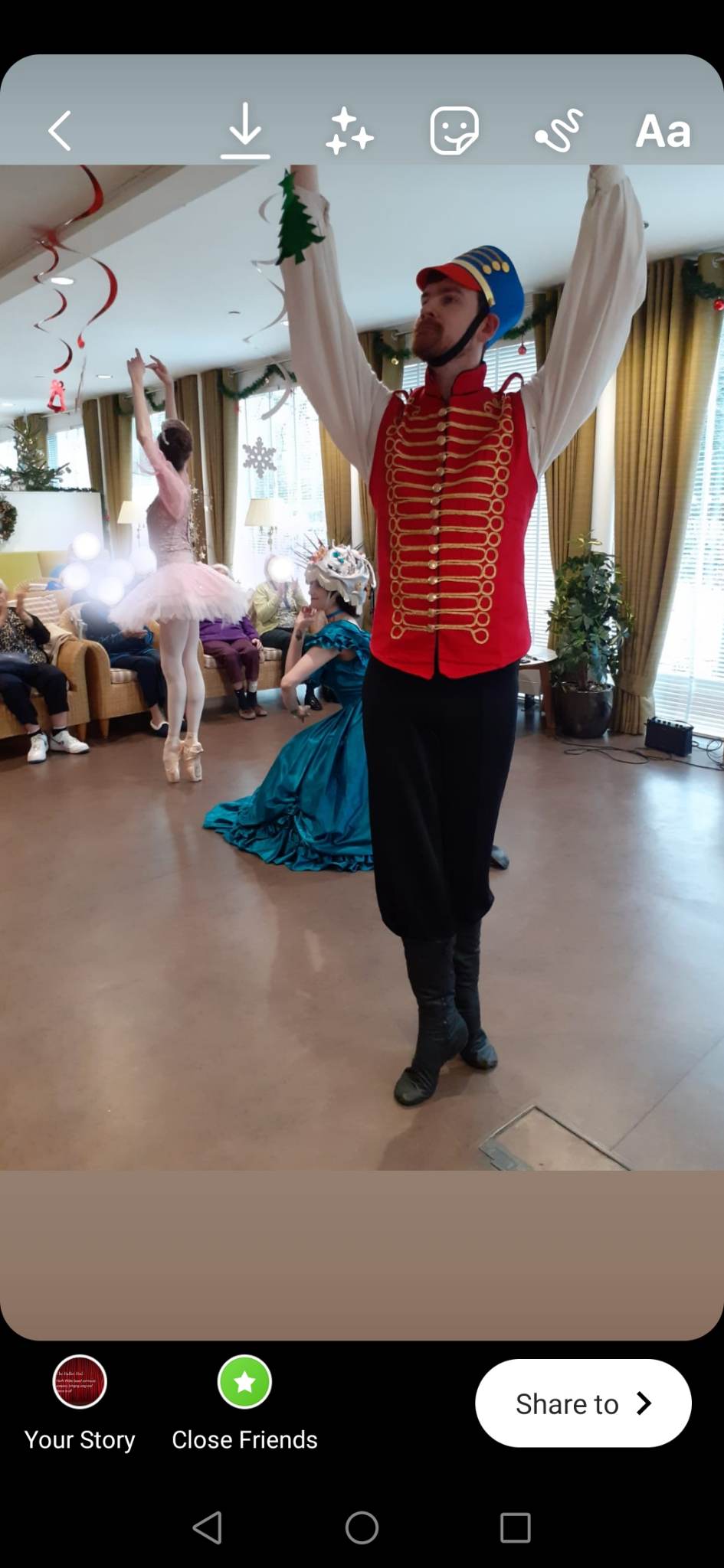
 For the last few weeks I have been engaging in some very fulfilling community dance performances.

First of all dancing at different schools across London as the Sugar Plum Fairy, surprising lots of little children by popping up in their classes. In total I performed 15 sugar plum fairy solos (adapted to suit any floor and any space) and improvised with the children afterwards. Some classes were pure magic and seemed to be totally emersed in the experience. What is fascinating for me to witness is how the children are able to do much harder movements than they perhaps would in their regular classes because they are so focused and are following me. It is like creating a special magic atmosphere in which they can learn. Yet some classes do not reach this same level of focus. Perhaps because in some classes the children are already unfocused and so when I enter I am not so much at my ease and this may affect may connection to the. But I am still exploring exactly what makes some of these classes so magical and some not.


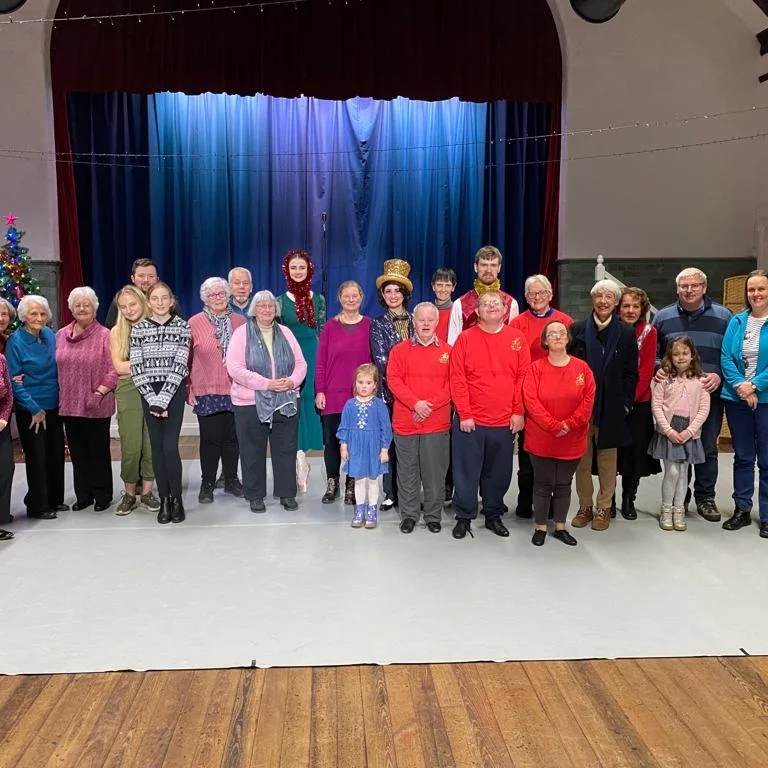
Then I travelled to Wales to work with The Ballet Pod. The family business which has now been going for 15 years and has given local performances every year over this time. We had a bookshop event, a community gala performance, a performance in a hospital and a performance in a care home.

In the middle of this was the submission deadline for my essay. It was crazy and there was little sleep that went on to be completely honest!

Yet it has been extremely rewarding. I worked for 15 days straight and am now taking a much needed rest.

But I want to reflect a little on some of the most significant moments and realisations from the last few weeks.

I first started performing with The Ballet Pod when I was 12 years old although it began unofficially when I was 10. Now as I look back at that time I realise how incredibly special it was to have that opportunity. It is very unusual t have a family business of entertainers and this has been very special to grow up with but also brought many challenges with it. We work together which means I have always found it very hard to shut down from work at the end of the day. It is challenging to ensure you keep the same respect for those you are so close to as you would any other colleague. It is difficult to get the tone of voice right, not too formal, not too familiar. But performing alongside my siblings also means that there can be total connection as we know each other so well.

However, the biggest realisation I have had has been that I was under a huge amount of pressure from a very young age and I did not have the skills to cope with that pressure. From the age of 14 I was teaching classes to myself, my siblings and later other children. I was in charge of costume organisation and inventories. Made all the headdresses for the company. Alongside this I was still taking my exams and doing academics. It was a lot and there were many lessons learned through that time. On returning this Christmas my duties were extended further due to staff shortages for various reasons. My responsibilities include teaching company class, teaching class and rehearsal and setting choreography for the children participating in our performance, sewing and creating costumes, fitting them, creating headdresses and sorting programming and administration and social media marketing. Rolling out, rolling up and carrying dance floor, writing out music cues and sending them through to the sound crew. Negotiating lighting and simple set up. rehearsal and performance scheduling. On top of this I have to get up and dance full pas de deuxs, solos and group dances, quick changes between each.

When I look at all this I realise that it is actually a huge amount but somehow when doing it I just get on with it! However I am now feeling that I cannot do the same level of work next year as it is a recipe for burnout. I feel that I need to take on someone else and delegate work I am going to be able to maintain my health and my dancing over the coming years. It just does not feel sustainable.


However, after 15 years working with The Ballet Pod I feel like I have come full circle and realised that the smallest most unlikely settings are where the biggest impacts can be made.

As I danced for those people in hospital I think of how much I love giving to those who are suffering. It is possible that this is because I am trying to make sense of a life of passed traumas. But I feel so strongly called to be of service.

This was the first hospital performance I had done but I felt strangely at ease within the setting. I danced well despite a concrete floor and an unconventional space.

One gentlemen became emotional during the Nutcracker pas de deux, perhaps overwhelmed by the music and the dance. But it was so special to see that later, after we had distributed our 'peace, love and hope' Christmas decorations, he was holding his decoration and looking at it intently then held it up to the crown of his head as if connecting to some spiritual force. 

Seeing people who were unwell and seeing their faces light up as I passed them was so special.

Also seeing the genuine emotion of the nurses. One of them was still becoming emotional thinking about it as we left.

For me, these are the moments I dance for. These are times I will cherish and always remember.

The child who takes your hand following a performance in a book shop

The patient's smile as you dance for them.

The audience member who wants to hug you following a performance

I would say these are the highlights of my career to date and I am proud of those highlights.

Dancing at The Linbury Theatre at The Opera House was special but I would say the moments of connection to people who would not otherwise access dance are the most treasured moments in my life.


Please note I have received consent to share these images publicly


Thursday, 24 November 2022

Inquiry into what lights the spark inside me

 I am returning to these questions which I explored earlier in the module but have needed to add to as my learning has developed across the module.


What in your daily practise gets you really enthusiastic to find out more about?

How trauma affects and manifests within the body.

Why people act the way they do.

The creative process of collaboration with a choreographer.

How I can develop my ability to direct others by using an empowering approach.

Bringing ballet to people who would not otherwise access it.

Dancer health.

Connecting to an audience

 Reaching a deep level of characterisation within the roles I dance

Mental health in dance- how can support services be improved for dancers and those working in the performing arts industry

The healing aspects of dance and how it can help with overcoming mental health issues

Inclusivity in dance


Who do you admire who also works with what makes you enthusiastic?

These are all people who all work or have worked in areas I am interested in, and I deeply admire all of them. They are just a very small proportion of the people I admire really because I when I think about it I realise just how many people I truly admire for different reasons.

Anna Pavlova, Misty Copeland,

Terry Hyde (dance psychotherapist) Lucie Clemence (Dance psychologist)


Nicky Keay,

Stephanie Potreck (Dance nutritionist and doctor),

Claudia Bagley (teacher)

Layla Harrison (former dancer, now teacher).

Ashley Bouder – recently spoke out about body shaming in the dance industry

Joseph Isaac Powell- Main

 Lauren Lovett

Julianne Rice-Oxley

Emma Slater

What gets you angry or makes you sad?

Dismissal of children’s needs and feelings.

 Dictatorship in directorship.

Not feeling I have a voice within the working environment.

Body shaming of dancers

Lack of awareness of mental health issues and ways of dealing with them in the dance industry


Who do you admire who shares your feelings or has found away to work around the sadness or anger?

 Misty Copeland,

Ashley Bouder

Terry Hyde

Stephanie Potreck

 Lauren lovette

 What do you love about what you do?

I love to get into an honest place with the roles I dance. I love collaborating with artists across diverse disciplines. I love to work with children who are dealing with mental health challenges and helping to build their confidence.  I love performing when I really know a role and feel prepared for it. I love reaching people who I wouldn’t ordinarily get to connect with by bringing dance to them. I love dancing in unusual places.

I love helping or giving something meaningful to others

I love being a part of change and development to make the dance industry a healthy environment and yet still produce wonderful art.

Being a support or role model to young dancers


 Who do you admire who also seems to love this or is an example of what you love?

I feel that once again I am returning to Anna Pavlova as my biggest inspiration. She was the focus of my BAPP and my interest in her work and the way she bought ballet to so many through authentic and expressionistic performance remains a huge interest of mine.

She is the most prominent person who seems to be this example for me yet she is not necessarily an example of health.

She performed all over the world and worked herself to a point of burnout probably. Therefore, as this module has developed, I realise that I want to continue to be inspired by her work but now progress this to the present and to find a way to live a meaningful career whilst still being an example of health to others.

Lauren Lovett

 Misty Copeland 

Marianella Nunez

Vadim Muntagirov


 What do you feel you don’t understand?

I feel that I am struggling to understand my place within the industry. I still feel there is a lot of dance within me that I want to share. I don’t understand where the boundaries are in my teaching sometimes, where my responsibility ends so to speak. I have a tendency to feel responsible for everything even that which is not necessarily my fault.

I really want to understand my upper body more so that I have better coordination. I want to understand why I have an inconsistent coordination when I dance. This has worsened since being unwell.


I don’t fully understand where my boundaries are in terms of how much I can push myself before I experience a decline in my health. I am still in search of balance to some degree although I have much more awareness than I used to.


Who do you admire who does seem to understand it or who has found a way of making not understanding it interesting or beautiful, or has asked the same questions as you?

Raymond Chai seems to have found his place within the industry as a dancer and teacher and held onto a sense of integrity through his work.

My ballet mistress has given her life to dance and teaches in a way that is nurturing and empowering to young people.

Layla Harrison is wonderful teacher who had a great freelance career.

The co-founders of Danscend official

Lauren Lovette former NYC Ballet dancer who became freelance during the pandemic

Sara Mearns dancer with New York City Ballet

Ashley Bouder

Richard Slaughter one of my first ballet teachers has this year come to new insights which have aligned us further.

Misty Copeland

Sally Marie director of sweetshop revolutions

Jack Philp


Misty Copeland in Swan Lake

Image from

Read Misty Copeland's Amazing Response to Her "Swan Lake" Critics (dancespirit.com) Last accessed 24/11/2022

The Essay

 As I reflect on the enlightening session last week with Peter Thomas in which Peter was exploring what defines an essay, I am inspired to s...